Need support now?
If you or someone you know is in suicidal crisis or emotional distress, contact the 988 Suicide & Crisis Lifeline. Specialized support is available for veterans.
AVPF’s contact form and email are not monitored for crisis response.
Connection & community
Finding Community After Military Service: Small Ways to Stay Connected
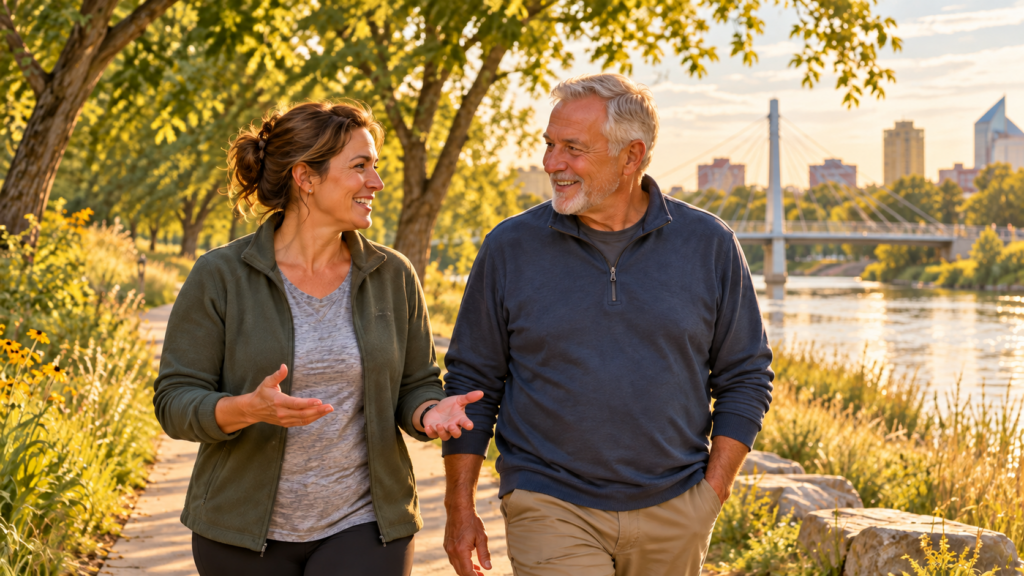
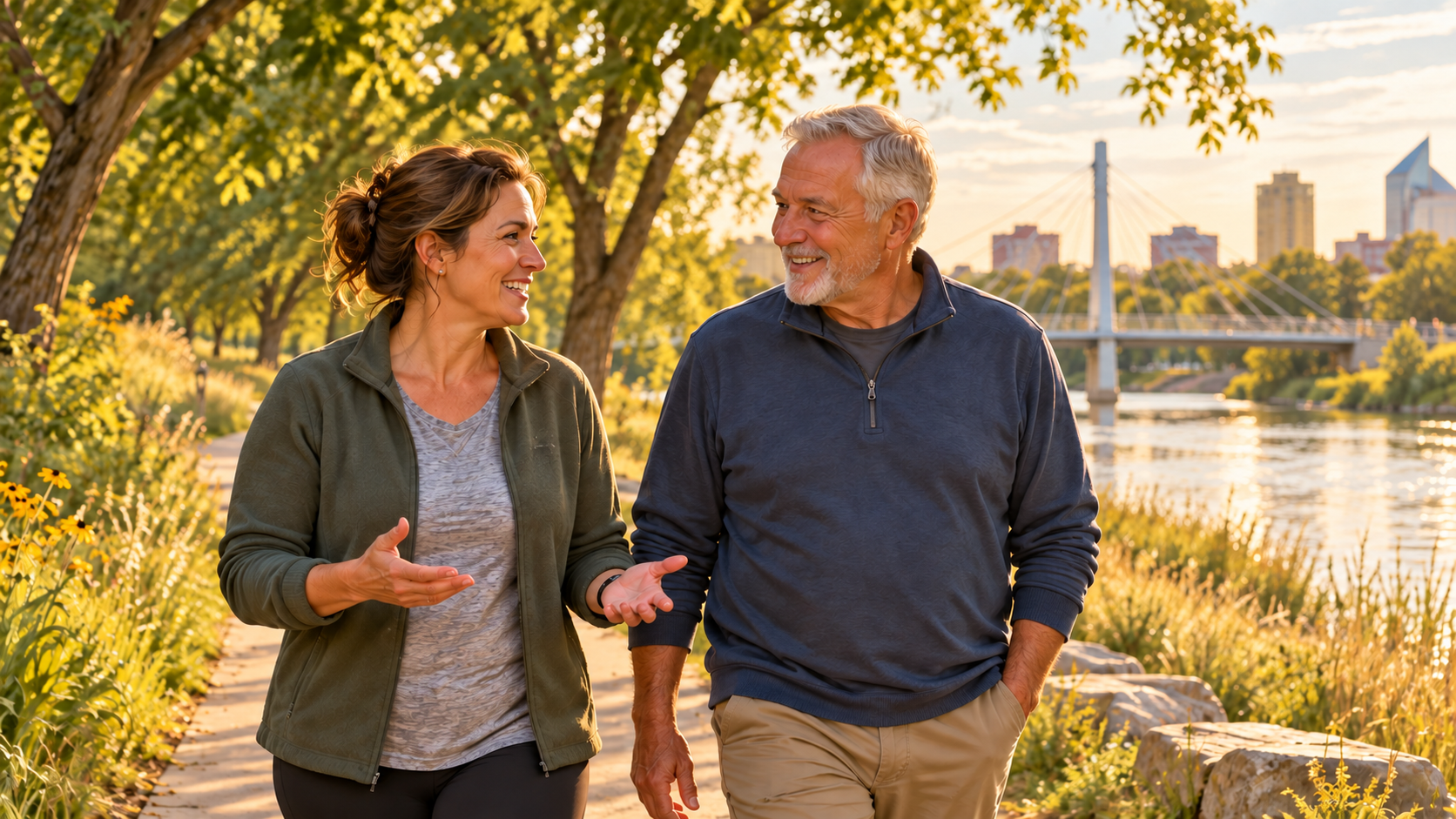
AI-generated illustration of neighbors connecting during a riverside walk.
A familiar face, a shared interest, or a conversation over coffee can be a place to begin building community. You do not need a large group or a full calendar to make room for connection.
For veterans whose routines have changed after leaving military service, moving, or changing jobs, meeting people may take a little planning. Start with something that fits your interests and the time you have.
Start with a shared interest
Think about something you already enjoy: music, gardening, walking, reading, cooking, or working on a small project. A shared activity gives people something natural to talk about.
You might reconnect with an old friend who enjoys the same thing, ask a neighbor about a hobby, or look into a community group. Before attending something new, check its current meeting details, any cost, and whether you need to register.
Make one clear invitation
A specific invitation gives someone an easy way to respond. Instead of leaving it at “We should get together,” suggest an activity and a time.
For example: “Would you like to meet for coffee Saturday morning? I have about an hour.” Or, “I’m taking a short walk this weekend. Would you like to join me?”
Keep the invitation comfortable for both of you. Give the other person room to decline or suggest another time.
Choose a pace you can keep
Consider your work schedule, family commitments, transportation, and the kind of gathering you prefer. A short conversation or an occasional visit may fit better than a long event.
If you enjoy meeting someone, suggest another manageable time to connect. You can build a routine slowly. When plans change, a brief message helps the other person know what to expect.
Let people share at their own pace
Military service may be something you have in common, but it does not have to be the subject of every conversation. Talk about current interests, family, a project, or something you are looking forward to.
You can choose what you want to share about your own experience. Give others the same choice. Listening, asking a simple question, and respecting someone’s boundaries can help make a conversation welcoming.
Connect through a practical task
If you prefer doing something together, consider a small task: working in a garden, organizing supplies, or helping with a community project. Agree on the task and the time involved before committing.
At A Veterans Peace Foundation, practical community work and personal connection are part of our Wichita-area mission. If you would like to help, tell James about your interests and availability so you can discuss current needs and whether there is a good fit.
Keep the next step simple
Choose one action you would like to try. Send a message to an old friend, ask a neighbor about a shared interest, or make an invitation you can follow through on.
To learn about the foundation’s work and ways to get involved, contact AVPF or sign up through Stay Connected.
If you want to reach out but are unsure what to say, our article Before You Reach Out: A Simple Checklist for Wichita Veterans includes a short example you can adapt.
Your service matters. Your story matters. You matter.
Leave a Reply